Bio: Brian Kernighan
 Dejan Vasic
March 3, 2026
Dejan Vasic
March 3, 2026

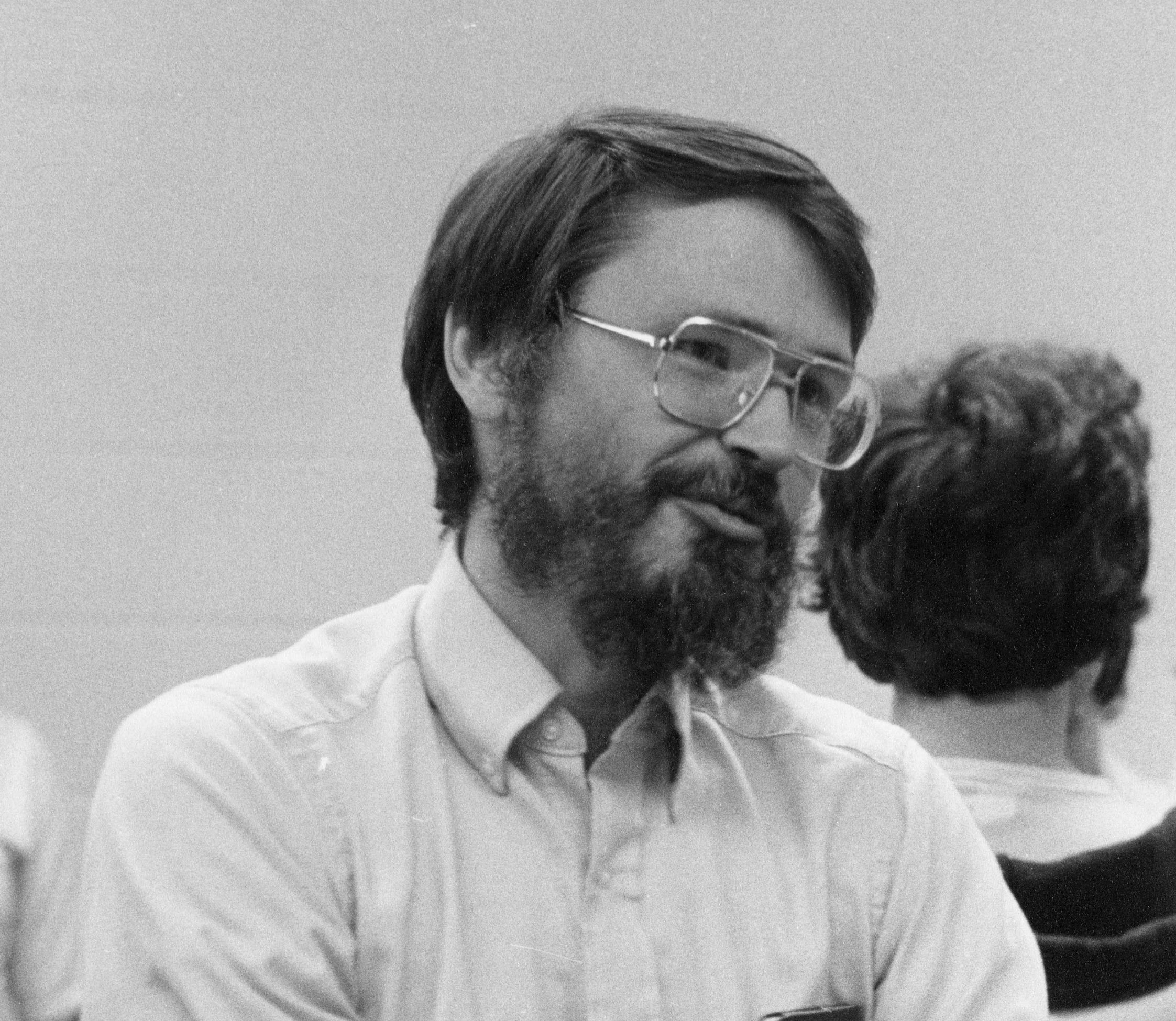
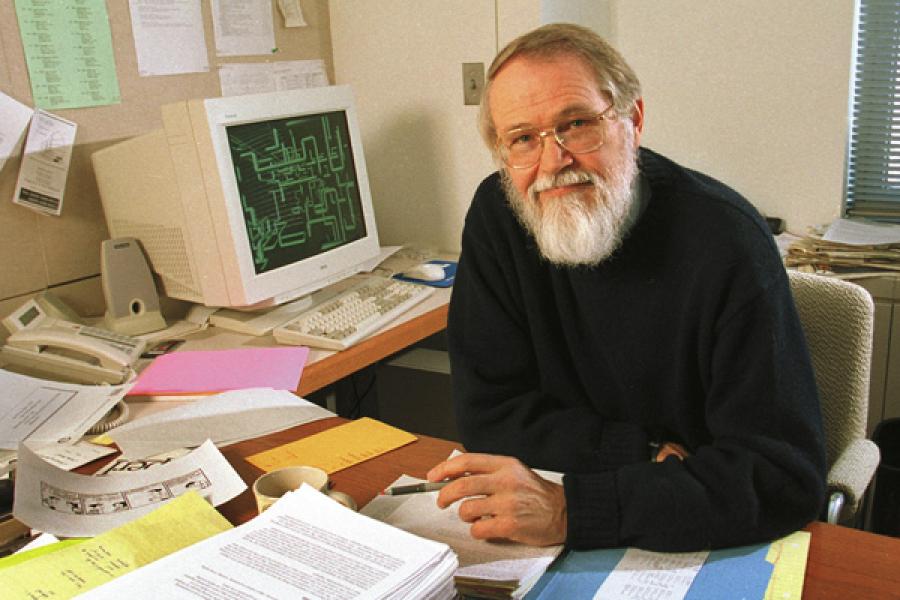
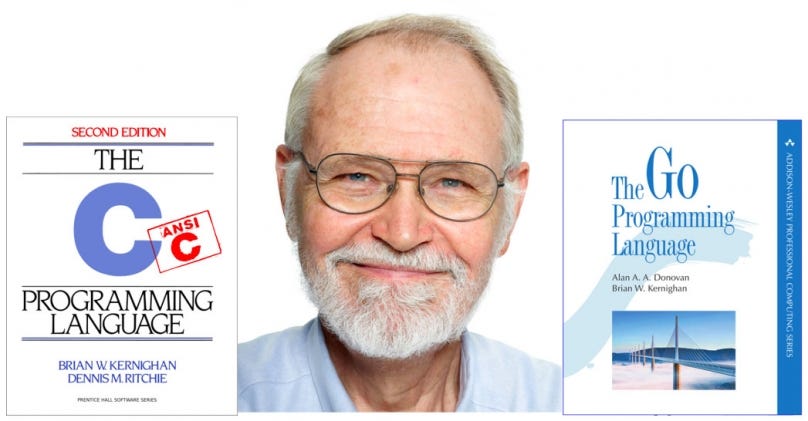
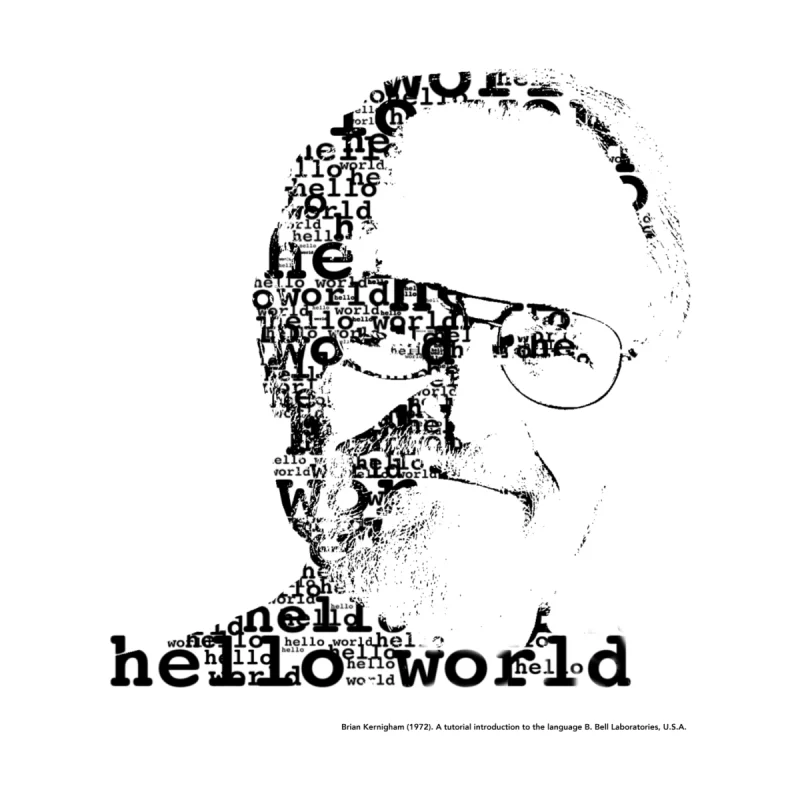
A small room at Bell Labs: a cluttered desk, a stack of punch cards, and a whiteboard full of terse diagrams. In the middle of it, a single, unassuming line of code sits on the page — printf("hello, world\n"); — and somehow it becomes a way to teach millions how to begin. Brian Kernighan is the kind of figure whose fingerprints are on that first step: not because he sought fame, but because he cared about clarity, examples that actually teach, and tools that let people get things done.
Kernighan’s story is both technical and human. He arrived at the center of computing’s formative years at Bell Labs, where collaboration with people like Dennis Ritchie and others produced languages, utilities, and a way of thinking about software that prizes simplicity and composability. The same mind that helped shape the canonical C textbook also wrote short, elegant programs and crisp explanations that turned bewildering concepts into practical habits. That combination — deep technical contribution plus a gift for teaching — is why a single line of code can carry so much meaning.
This article opens with that line because it’s a perfect lens: through it we see Kernighan’s priorities — readable examples, minimal ceremony, and an insistence that tools should serve people, not the other way around. From the classroom to the data center, from scripting one-off text-processing tasks to designing languages and algorithms, his influence is visible in how engineers learn, how teams build, and how businesses automate work. The rest of the piece will move from anecdotes and human moments to the concrete inventions and the long tail of their impact, but it begins here, with a teacher’s instinct to make the first step obvious and inviting.
One‑minute biography
Brian W. Kernighan was born on January 30, 1942, in Toronto, Canada. He earned a degree in engineering physics from the University of Toronto in 1964 and completed his PhD at Princeton in 1969 with a dissertation on graph‑partitioning problems. After his doctorate he joined Bell Labs, where he spent roughly thirty years working closely with Unix pioneers including Dennis Ritchie; during that time he coauthored key tools and languages (notably The C Programming Language, AWK, and AMPL) and developed algorithms that bear his name. Since 2000 he has taught at Princeton as the William O. Baker Professor in the Computer Science department, running courses and remaining active in writing and public outreach.
Quick facts
- Year of birth — 1942.
- PhD — Princeton, 1969.
- Bell Labs — ~30 years; senior roles in Computing Science Research.
- Notable works — The C Programming Language (K&R), AWK, AMPL, Kernighan–Lin algorithm.
What he created and how
Brian Kernighan combined practical engineering of tools with an exceptional ability to explain them clearly — often writing short, tested examples that became models of technical writing. His contributions span textbooks, programming languages, heuristics for algorithmic problems, and many Unix utilities; each contribution has both a technical and a pedagogical side: the tool or language solves a real problem, and the documentation makes it accessible.
The C Programming Language (K&R)
- What — Coauthor of The C Programming Language (1978) with Dennis Ritchie; the canonical early book on C, commonly called K&R.
- How — Kernighan wrote much of the explanatory and tutorial material while Ritchie contributed reference material; the book’s examples were tested from source and set a standard for clarity and concision in technical exposition.
- Why it matters — The first edition long served as the de‑facto standard for C and shaped how the language was taught and used in both academia and industry.
#include <stdio.h>

int main(void) {
    printf("hello, world\n");
    return 0;
}
AWK (text‑processing language)
- What — AWK is a compact, powerful language for processing text data, created by Alfred Aho, Peter Weinberger, and Brian Kernighan.
- How — Designed as a “little language” for common line‑and‑field processing tasks; its syntax and semantics favor short, readable scripts that fit the Unix philosophy of composable tools.
- Impact — AWK became a standard Unix tool and influenced later scripting languages and automation practices.
AMPL (modeling language for optimization)
- What — AMPL (A Mathematical Programming Language) is an algebraic modeling language for formulating and solving large optimization problems; coauthors include Robert Fourer, David Gay, and Brian Kernighan.
- How — AMPL separates model from data and expresses optimization problems in notation close to mathematical form, while interfacing with multiple solvers.
- Where used — Industry and academia for planning, scheduling, production optimization, and other problems where readable models and solver interoperability matter.
Kernighan–Lin and Lin–Kernighan heuristics
- What — Heuristic algorithms for hard combinatorial problems: Kernighan–Lin for graph partitioning and Lin–Kernighan for the Traveling Salesman Problem.
- How — Kernighan–Lin uses iterative node‑pair swaps to reduce the cut size in a partition; the approach is practical, fast, and often yields high‑quality solutions for real instances.
- Why significant — These heuristics became standard techniques in VLSI layout, optimization, and algorithmic literature because they balance efficiency and solution quality.
Unix tools and typesetting systems
- What — Author or coauthor of many small Unix programs and tools such as
ditroff,eqn,pic, andratfor. - How — His
ditroffwork introduced a device‑independent output layer that enabled support for multiple devices via postprocessors, making Unix typesetting and documentation more portable and professional. - Effect — These tools reinforced the Unix philosophy of many small programs that work well together and enabled high‑quality technical documentation in Unix environments.
Books, series, and pedagogical contributions
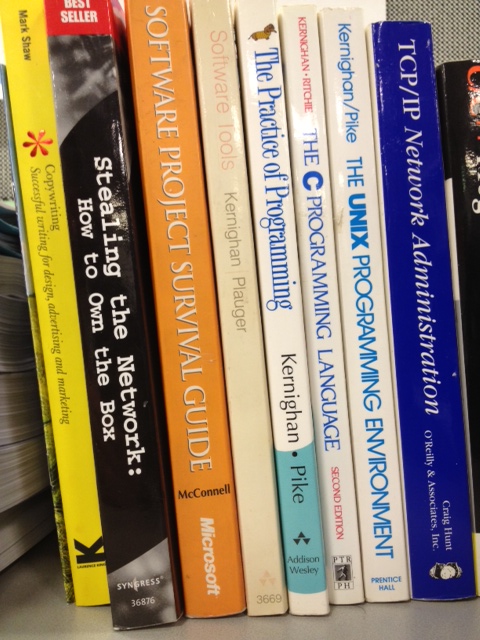
- What — Beyond K&R and AWK, Kernighan authored or coauthored influential works such as Software Tools, The Elements of Programming Style, and manuals for Ratfor and other tools.
- How — His style is concise, example‑driven, and practical; he often provided small, portable tools together with explanatory texts that served as working resources for engineers.
- Why enduring — The combination of engineering focus and clear communication created a repeatable model for introducing new technologies into practice and teaching.
Synthesis: how he worked
- Practicality — tools solved concrete problems (text processing, typesetting, optimization).
- Simplicity — language and tool designs favored a small, clear core of functionality.
- Pedagogy — documentation and examples were integral to delivery; examples were tested and usable.
This trio — practical problem solving, minimal design, and strong pedagogy — explains why Kernighan’s work was quickly adopted and has remained relevant.
Anecdotes and fun stuff
Brian Kernighan’s career is full of small, human moments that reveal how he thought about tools, teaching, and the culture of computing. These stories are useful hooks for readers because they show the personality behind the technical contributions.
The real origin of “hello, world”
The now‑ubiquitous example traces back to Kernighan’s early tutorials. He used the phrase in a 1972 tutorial for the B language and later included a version in a 1974 Bell Labs memo and the 1978 C book that popularized it; over time that short program became the canonical first example for many languages.
Bell Labs as a creative workshop
Kernighan often describes Bell Labs as an environment where people picked projects they needed themselves and wrote tools to solve immediate problems. He became known as the group’s scribe — the person who turned internal tools and experiments into clear tutorials and manuals — and that habit of documenting small, useful programs helped spread Unix culture.
Wry humor and memorable phrases
Kernighan coined or popularized several pithy expressions that stuck in hacker lore. One famous example is WYSIAYG (“What You See Is All You Get”), a sarcastic riff on WYSIWYG used to warn that visual editors can discard useful underlying structure. That dry, cautionary humor reflects his practical bent: tools should be honest about what they preserve and what they throw away.
Teaching tricks and debugging folklore
Kernighan’s writing and teaching are full of pragmatic tips that double as anecdotes. He famously recommends simple, well‑placed print statements and careful thought as the best debugging tools, and he’s told stories about techniques that make debugging social — for example, explaining a bug aloud to someone (or even a teddy bear) often helps you find the mistake yourself. These small rituals capture his belief that clarity of thought beats clever hacks.
Little artifacts with big stories
A few concrete curiosities make good sidebar material: Kernighan’s original implementation and other historical artifacts have appeared in algorithm auctions and museum displays; his short, tested examples from Software Tools and The Elements of Programming Style read like working tools rather than abstract theory. These artifacts underline a recurring theme: Kernighan built things to be used and taught.
Quick list of bite‑size anecdotes
- “hello, world” origin — from B tutorials to the C book.
- Bell Labs scribe — wrote tutorials and small tools that became standards.
- WYSIAYG — Kernighan’s sarcastic take on WYSIWYG.
- Debugging advice — print statements, explain the bug aloud, keep examples tiny.
Impact on today’s world and business
Brian Kernighan’s work affects modern industry and business through several interconnected channels: education, tools and infrastructure, algorithmic techniques, and engineering culture. Each layer produces measurable, long‑term effects — from curricula that still use K&R, through scripting and automation in operations, to partitioning and optimization methods used in chip design.
Education and talent development
• K&R as a curricular pillar — The C Programming Language shaped how systems programming is taught for decades, directly influencing engineers who build operating systems, compilers, and embedded systems.
• Pedagogical model — Kernighan’s approach (short, tested examples; emphasis on clarity) became a standard in technical writing and teaching, shortening ramp‑up time for new hires and improving early productivity.
Tools, scripting, and operational efficiency
• AWK and Unix tools in automation — AWK and related Unix utilities remain part of daily toolchains for data processing, ETL pipelines, and system administration; this enables faster prototyping, fewer heavyweight dependencies, and lower automation costs.
• Unix philosophy in modern engineering — The principle of “small tools that work well together” influenced composable tooling and microservice thinking, improving team agility and delivery speed.
Algorithms and industry applications
• Kernighan–Lin in VLSI and layout — The Kernighan–Lin heuristic for graph partitioning is used in chip layout and related tools, where reducing cut size improves performance, power, and manufacturing cost.
• Heuristics in business optimization — Practical heuristics inspired by Kernighan’s work are applied in scheduling, resource allocation, and supply‑chain optimization, where near‑optimal solutions deliver significant cost savings without the expense of exact optimization.
Measurable indicators of impact
• Longevity and citation — Kernighan’s books and papers remain widely cited and used in courses, indicating sustained academic and practical influence.
• Standards and ubiquity — Tools like AWK are part of POSIX and standard Unix distributions, ensuring long‑term availability and low adoption friction for businesses.
Business implications and recommendations
• For product leaders and CTOs — Investing in simple, composable tools and in clear documentation (short, tested examples) reduces onboarding costs and increases codebase maintainability.
• For infrastructure and DevOps teams — Preserving and evolving Unix‑style text pipelines and small utilities often yields faster iterations and simpler automation than adopting heavy, monolithic solutions.
• For R&D and optimization teams — Applying practical heuristics (e.g., Kernighan–Lin variants) can produce large operational savings in domains such as VLSI, logistics, and scheduling without the overhead of exact solvers.
Short synthesis
Kernighan’s impact is less about a single product and more about a way of thinking: clear pedagogy, practical tools, and effective heuristics. That combination accelerates learning, simplifies automation, and delivers pragmatic optimization techniques that reduce time‑to‑value and cost for businesses.
What he does now and what’s publicly known about his life
Brian W. Kernighan is an active academic and public figure whose recent professional life is well documented in institutional and publication records. He holds the William O. Baker Professor title in the Computer Science Department at Princeton University, where he joined the faculty in 2000 and continues to teach, write, and advise students.
Professional activities and teaching
• Teaching — Kernighan regularly teaches undergraduate courses at Princeton, including an introductory course aimed at non‑majors that surveys computing’s role in society.
• Research and writing — He remains active as an author and editor: recent editions and new books (including work on AWK and a 2015 coauthorship on The Go Programming Language) and ongoing papers and essays on programming practice and tools.
• Public engagement — Kernighan gives talks, participates in conferences and panels, and contributes to the public record through interviews and essays that reflect on software practice and education.
Honors, influence, and scholarly footprint
• Scholarly impact — His publications (K&R, AWK, AMPL, Kernighan–Lin papers, and others) continue to be widely cited; citation indices and academic profiles show sustained influence across decades.
• Professional recognition — Kernighan has received numerous honors and held editorial and advisory roles (for example, long‑standing editorial work and series editorships), reflecting his standing in both research and professional communities.
What is publicly available about his personal life
• Residence and privacy — Public, reputable sources identify Kernighan’s professional affiliation and Princeton as his academic base; beyond that, most reliable public records and profiles focus on his work rather than private details. There is no authoritative, widely‑cited public source that documents personal items such as the make of his car or intimate household details, and such claims should not be published without explicit, verifiable sources.
• Use of public records — Local property or municipal records can sometimes provide factual data about property ownership or parcel size, but those records are jurisdictional and must be consulted directly (and cited) before reporting specifics. I have not pulled or cited any such municipal records here.
Short synthesis
Kernighan today is best described as a professor, author, and public intellectual in computing: he teaches at Princeton, continues to publish and speak, and remains a visible influence on programming education and tooling. Public sources emphasize his professional contributions and outreach; private life details are limited in reputable public records and should be treated with care.
Conclusion and takeaways for developers
Brian Kernighan’s career is a compact lesson in how to make software ideas stick: build tools that solve real problems, document them with tiny, tested examples, and prefer simple, composable designs over clever complexity. His work (K&R, AWK, small Unix utilities, practical heuristics) didn’t just produce artifacts — it produced habits of thinking that speed learning, reduce maintenance cost, and scale across teams and organizations.
Practical takeaways (actionable for day‑to‑day work)
• Prefer small, well‑focused tools. Design components that do one job well and compose cleanly with others; this reduces coupling and accelerates iteration.
• Ship examples, not just APIs. Include short, runnable examples with every library or tool you publish; examples are the fastest path from curiosity to productive use.
• Document to teach, not to impress. Write explanations that assume the reader will copy and run the code; clarity beats completeness when onboarding new engineers.
• Use pragmatic heuristics where exact solutions are impractical. For hard optimization problems, a fast, well‑tested heuristic often delivers most of the business value at a fraction of the cost.
Design and team‑level recommendations
• Make examples part of CI. Treat the tiny examples you publish as tests so they never rot; this preserves the pedagogical value over time.
• Favor text pipelines for automation. When appropriate, prefer simple text‑processing tools and scripts for ETL and ops tasks — they are easy to inspect, version, and compose.
• Invest in a “scribe” role. Assign someone to turn internal experiments into short tutorials and recipes; that role multiplies the impact of R&D work.
What developers gain by adopting Kernighan’s habits
• Faster onboarding — clear examples and small tools shorten the time for new hires to become productive.
• Lower maintenance cost — simpler, composable pieces are easier to test, replace, and reason about.
• Better communication — concise documentation and examples make design intent explicit and reduce costly misunderstandings.
One‑sentence takeaway
Build small, document with runnable examples, and prefer practical solutions that people can understand and reuse.